You are standing beside a clear mountain stream. The water looks clean. It probably tastes cold and fresh. But drinking it straight from the source is a gamble that can end your trip in the worst way.
The truth is simple. Water that looks perfect can carry tiny organisms that make you sick for days. Giardia and Cryptosporidium are two common culprits in backcountry water, and they do not care how remote your campsite feels . A good water filter is the tool that stands between you and that how to choose a camping water filter.
Choosing the right filter is not about buying the most expensive option or the one with the biggest numbers on the box. It is about matching a filter to how you camp, how much water you need, and what kind of water you will face. This guide walks through every part of that decision so you can pick with confidence.
Start With the Most Important Question: Filter or Purifier?
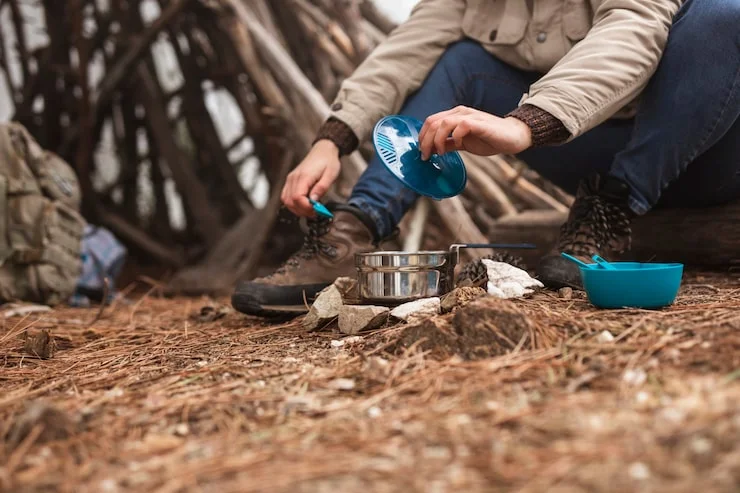
Most people use the word “filter” for everything, but there is a real difference. A water filter pushes water through tiny holes that trap bacteria and protozoa. Those holes are measured in microns, and they are small enough to catch the things that make you sick in most North American backcountry settings .
A water purifier goes further. It also removes or kills viruses. Viruses are much smaller than bacteria, so a standard filter cannot catch them. For most camping in the United States and Canada, a filter is enough. The risk of viruses in mountain streams and alpine lakes is low .
But if you are traveling internationally, especially to places where human waste could contaminate the water supply, you want a purifier. The same goes for camping near heavily populated areas or farmland where runoff is a concern .
Here is a simple way to remember it: a filter handles the bugs that live in the wild. A purifier handles the bugs that come from people. Match your tool to the water you will actually face.
Read Also: The Significance of Everest Base Camp in Climbing
Know the Four Main Types of Camping Water Filters
Every filter on the market falls into one of a few basic designs. Each design solves a different problem. Understanding the trade-offs is the heart of choosing well.
Squeeze filters are the lightest and most packable option. You fill a soft bag with dirty water, screw the filter onto the bag, and squeeze the water through into your bottle or mouth. The Sawyer Squeeze is the classic example, and it has a huge following among backpackers for good reason . It weighs almost nothing, takes up very little space, and can last for years. The downside is effort. Squeezing a liter of water takes about a minute of hand work, and the filter needs occasional backflushing to keep flowing well .
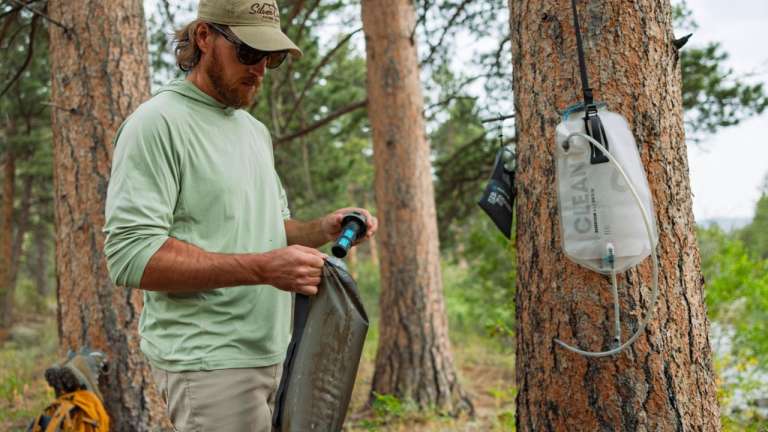
Gravity filters take the work out of filtering. You fill a dirty water reservoir, hang it from a tree branch, and let gravity pull the water through the filter into a clean container below. This is the best choice for base camps, groups, and anyone who does not want to spend time pumping or squeezing after a long day of hiking . The trade-off is weight and bulk. Gravity systems are larger, and they need something to hang from. They are also slower than squeezing or pumping, but since you are not doing the work, the wait matters less .
Pump filters push water through the filter with a hand pump. They are fast and work well in shallow or still water where bags are hard to fill. The MSR Guardian is a well-known pump that also purifies viruses, which makes it a strong choice for international travel . But pumps are heavier than squeeze filters, they have more parts that can break or get lost, and pumping is physical work . For most casual campers, a squeeze or gravity system is simpler and lighter.
Bottle and straw filters are built into a container. You fill the bottle with dirty water and drink through the filter, or you use a straw directly in a stream. These are perfect for solo day hikes and trail running where you want to drink on the move without stopping to filter a full bottle . The clear limitation is capacity. You cannot easily filter water for cooking or for a group with a straw. These are personal drinking tools, not camp water systems.
Match the Filter to How You Actually Camp
The best filter for a solo backpacker is not the best filter for a family driving to a campsite. Think about your real trip before you buy.
For backpacking and ultralight trips, weight is the deciding factor. A squeeze filter like the Sawyer Squeeze or the Katadyn BeFree is the right answer. They weigh just a few ounces, pack into a pocket, and handle the volume one person needs . If you hike with a partner, one squeeze filter and two bags can work for both of you. The key is to accept that filtering takes a little hand effort and that you need to backflush the filter every few days to keep it flowing .
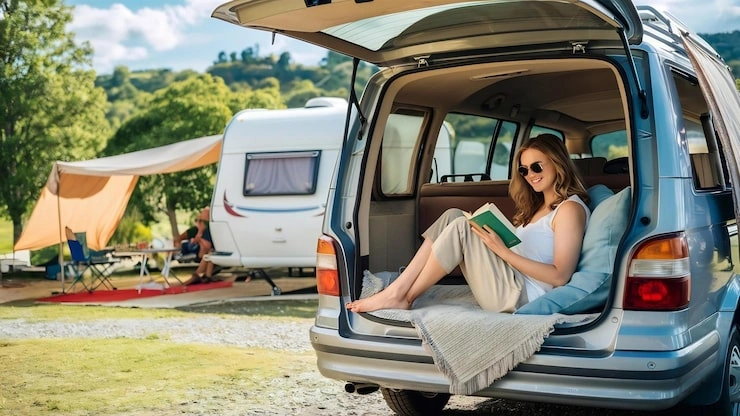
For family camping and car camping, you have different priorities. You are not carrying the filter on your back, so weight matters less. What matters is volume and convenience. A gravity filter with a large dirty bag is ideal here. You can filter several liters at once while you set up the tent or cook dinner. The Platypus GravityWorks is a popular choice for this kind of use . For a family of four, having a steady supply of clean water for drinking and cooking without standing over a pump is a real comfort.
For international travel and uncertain water sources, you need purification. The Grayl GeoPress is a bottle-style purifier that removes viruses, bacteria, protozoa, and even some chemicals and heavy metals . You fill the outer bottle, press the inner bottle down, and have clean water in seconds. The filter does not last as long as a simple hollow-fiber filter, and the unit is heavier, but the protection is much broader . If you are camping somewhere that makes you nervous about the water, this kind of tool is worth the extra weight.
For emergencies and backup, chemical drops or tablets are worth considering as a second layer of protection. They are tiny, light, and have no moving parts. The catch is time. Some chemicals need hours to kill certain organisms, and they do not remove dirt or sediment . Keep them as a backup, not as your how to choose a camping water filter.
You May Also Like: Capturing Subjects With Distinct Shapes
The Details That Make or Break a Filter
Once you know the type you want, a few specific features separate a good experience from a frustrating one.
Flow rate is the number you will notice most. A filter that claims a fast flow rate may slow down as it clogs, so look for one that is easy to clean in the field. Backflushing with a syringe or shaking the filter in water are common cleaning methods . If a filter is hard to clean, it will slow to a trickle and you will stop using it.
Filter lifespan tells you how long the cartridge lasts before replacement. Hollow-fiber filters like the Sawyer Squeeze can last for thousands of liters, which means most campers will never need to replace one . Bottle purifiers have shorter lifespans, sometimes just a few hundred liters, so replacement cost is part of the real price . Do the math on how often you camp before you decide.
Connections and compatibility matter more than people expect. A filter with a standard screw thread can attach to many bottles and bags, which makes your setup more flexible . A filter with a proprietary connection locks you into that brand’s accessories. Check what bottles or bladders you already own before you buy a filter that will not fit them.
Durability in cold weather is a real concern for anyone camping in shoulder seasons or winter. Water left inside a hollow-fiber filter can freeze and crack the fibers, ruining the filter . If you camp in freezing conditions, plan to sleep with your filter inside your sleeping bag to keep it warm.
A Simple Decision Path
If you are still unsure, walk through these questions in order. They will lead you to the right category.
First, where are you camping? If it is the United States or Canada and you are in the backcountry, a filter is enough. If it is international or near human activity, get a purifier.
Second, how are you getting there? If you are carrying everything on your back, choose a squeeze filter. If you have a vehicle or a base camp, choose a gravity system.
Third, who is with you? Solo hikers do well with a squeeze or bottle filter. Groups and families need a gravity system or a large pump.
Fourth, what is your backup? Every camper should have a backup plan for water treatment. A small bottle of chemical drops weighs almost nothing and can save a trip if a filter clogs or breaks.
Conclusion
A camping water filter is not a complicated piece of gear, but the wrong choice makes every water break a chore. The right choice makes clean water so easy that you stop thinking about it.
For most campers in North America, a simple squeeze filter for backpacking or a gravity filter for car camping covers the need at a fair price and with reliable results. For travel where the water is more questionable, spend the extra money and weight on a purifier. And whatever you choose, learn to clean it, store it dry, and keep it from freezing.