Feeding a crowd at a campsite is not the same as cooking at home. Your kitchen is smaller. Your fuel runs out faster than you expect. The sink is a plastic tub. And when eight or twelve people are hungry at the same time, the difference between a good trip and a miserable one often comes down to whether dinner shows up hot and camping meals for large groups.
This guide is built for the person who got volunteered to plan the food. It covers how much to bring, what to cook, how to keep it safe, and how to run a camp kitchen without losing your mind. No fancy techniques. No ingredients you cannot find at a normal grocery store. Just a clear plan for feeding a group outdoors.
Start With Numbers, Not Recipes
The first mistake most people make is scrolling through recipe sites before they know how much food they actually need. A recipe that serves four is useless if you are cooking for ten.
You need a simple way to scale. For most one-pot meals like chili, curry, or stew, plan on roughly one and a half to two cups of finished food per adult per meal. That means a group of ten needs about four to five liters of finished chili, not a doubled recipe meant for a family of four. Write down your headcount, then write down your meal count, then build your shopping list from those two numbers.
This sounds obvious. But when people are excited about a trip, they buy ingredients based on vibes and end up with three times too much pasta and not enough coffee. Do the math first.
Your Stove Setup Will Make or Break the Trip
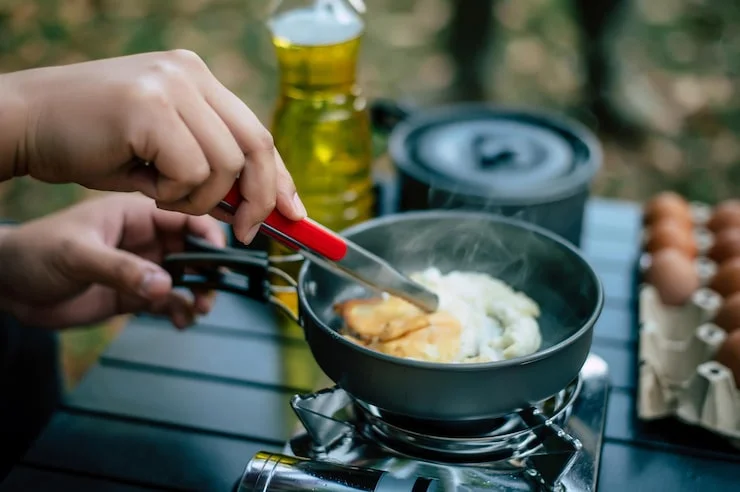
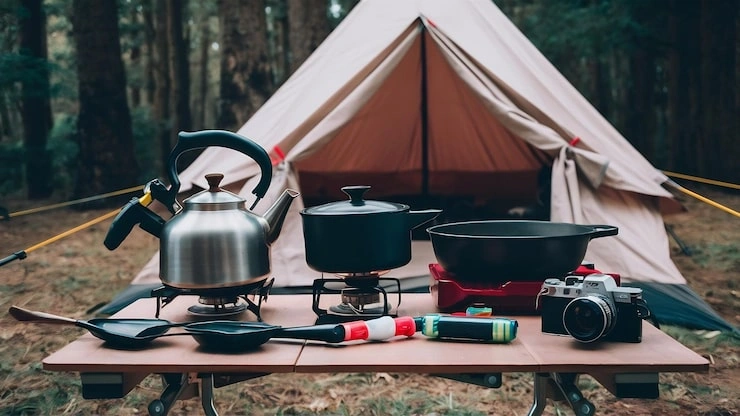
A single camping stove is fine for boiling water for one person. It is not fine for a group. The practical rule is one burner for every two to three people per meal . For a group of eight, that means two double-burner stoves at minimum, or one stove dedicated to the main pot and another for sides, drinks, and backup.
Think about what you are actually cooking. If dinner is a big pot of chili and a pot of rice, you need two burners running at the same time for a long stretch. If you are doing burgers and corn, you need a grill plus a burner for anything that does not fit on the grate. Running out of burner space is frustrating. Running out of fuel is worse.
Fuel consumption climbs fast with group cooking. Two double-burner stoves running for three meals a day can burn through roughly one standard canister per day . For a weekend trip, pack more fuel than you think you need. Running out of gas during the main meal is the kind of problem that turns a fun trip into a tense one.
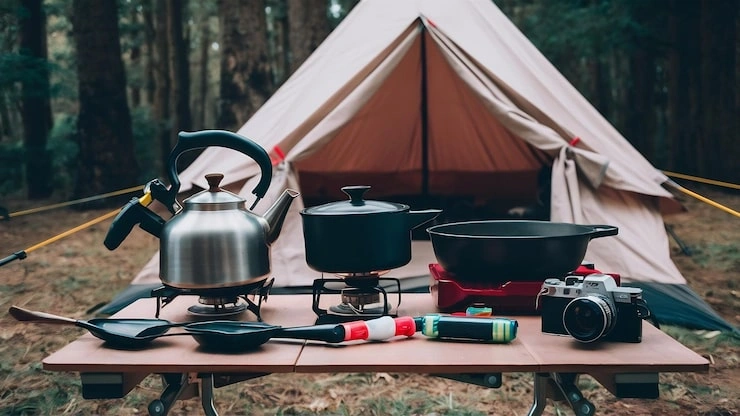
Your cookware also needs to scale up. The two-liter pot that came with your starter camping kit will not hold chili for eight people. Bring a four- to five-liter pot from home if you have one, or borrow one. Large pans, a big kettle, and proper serving utensils like ladles and large spoons matter more than fancy gadgets .
Read Also: Backpacking Food Ideas For Beginners
Meals That Work for a Crowd
The best group camping meals share three traits: they cook in one pot, they can sit on a low flame without ruining, and they do not require individual assembly at the campsite.
Chili or a thick meat-and-bean stew is the gold standard. You can brown meat and onions at home, freeze the base, and reheat it at camp. It feeds a crowd, stretches with canned beans and tomatoes, and tastes better after sitting for a day. Serve it with rice cooked on a second burner, or with bread and a simple slaw that you made in a bag before you left.
Curry works the same way. A big pot of chickpea or chicken curry with rice is filling, cheap, and forgiving. The sauce can be made ahead and frozen flat in zip-top bags, which also helps keep your cooler cold during the drive.
A taco or burrito bar is the meal that solves the picky eater problem without you having to cook three different dinners. Cook seasoned ground beef or shredded chicken in one pot, warm tortillas on a dry pan, and set out cheese, lettuce, salsa, and whatever else you brought. People build their own plates. Cleanup is easier because there is no single serving dish to scrape .
Breakfast is the hardest meal to scale. Eggs cooked to order for twelve people is a nightmare. Instead, do a one-pan breakfast bake: potatoes, sausage, peppers, and eggs all in one large cast iron pan or Dutch oven. Or set up a pancake station with pre-mixed dry ingredients in bags, and cook pancakes in batches on a griddle that spans two burners. Keep the first batches warm in a foil pouch near the fire .
For the first night, bring something frozen. A frozen chili or soup acts as a cooler block during travel and becomes dinner with zero effort once you arrive. You do not have to cook on the night you set up camp. That is a gift you give yourself .
Prep at Home, Not at Camp
The single biggest time-saver for group camping is doing the knife work before you leave. Chop onions, peppers, and carrots at home. Cook and crumble the meat. Measure spices into small bags or containers. Label everything with the meal it belongs to.
This is not just about convenience. It is about food safety. Raw meat juices on a cutting board at a campsite with limited washing water is a real risk. Handling raw chicken at home, cooking it, and packing it cooked eliminates that problem entirely .
Freeze what you can. Frozen meals in flat bags stack efficiently in a cooler and keep everything else cold longer. Block ice lasts longer than cubes, and frozen juice boxes or water bottles do double duty as cooling packs and drinks later .
Pack your cooler with intention. One cooler for drinks, one for food. Every time someone opens the food cooler to grab a soda, cold air escapes and the food warms up. A separate drink cooler solves this . Keep raw items on the bottom and cooked or ready-to-eat items on top. If you cannot keep something cold, do not bring it.
Food Safety Without the Stress
The rules for group camping food safety are not complicated. They just require you to pay attention when you are tired and hungry.
Keep cold food at 40°F (4.4°C) or colder. If your cooler still has ice in it at the end of the day, leftovers are probably safe. If the ice is gone and the food has been sitting in warm water, throw it out. Do not gamble on potato salad that has been sweating in the sun for four hours .
Bring more water than you think you need for cleaning. Handwashing with soap and running water is the best defense against getting sick. If you do not have a tap at your site, set up a water container with a spigot and a bucket underneath to catch the waste water. A bottle of hand sanitizer is a backup, not a replacement for washing when you have been handling raw meat or going to the bathroom .
Keep raw meat separate from everything else. Use different utensils for raw and cooked foods. If you are not sure whether something is still safe, err on the side of throwing it away. No one remembers the meal you threw out. Everyone remembers the trip where half the group got sick.
The Workflow That Keeps Everyone Fed
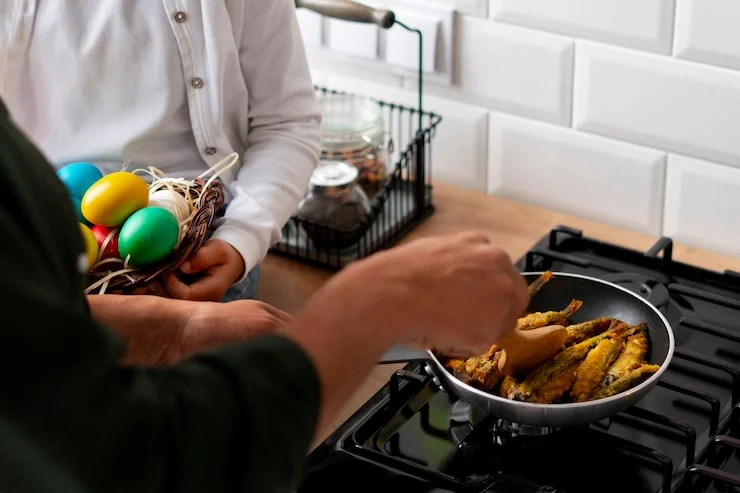
A group camp kitchen works best when it is treated like a small restaurant with assigned jobs, not a free-for-all.
Before the trip, ask about dietary needs. Not in a vague "any restrictions?" way, but with specific categories: vegetarian, gluten-free, allergies. Write it down. Plan one meal that works for everyone, or plan a base meal that people can modify. A taco bar works because the meat is separate from the tortillas, the cheese, and the vegetables. Someone who does not eat meat can still build a full plate .
At camp, assign roles before anyone starts cooking. One person runs the main pot. One person handles chopping and sides. One person is on kettle duty, keeping hot water going for drinks and dishwashing. One person starts washing up as soon as the first pans are empty, not after everyone has eaten and the food has dried onto the bottom .
This is not about being bossy. It is about making the work visible so it does not all land on one person. Cooking for a group at a campsite can actually be fun when four people are working together around a table with headlamps on. It is miserable when one person is stuck scrubbing a burnt pot in the dark while everyone else sits by the fire.
You May Also Like: Easy Camping Meals For Family: My Complete Guide
A Sample Two-Day Menu for Eight People
This is not a rigid plan. It is a starting point you can adjust based on what your group eats and how much effort you want to put in.
Friday dinner: Frozen chili reheated in a large pot. Rice cooked on a second burner. Bagged slaw with a simple dressing. Tortilla chips on the side. No cooking from scratch after setup.
Saturday breakfast: Pre-mixed pancake dry ingredients. Cook in batches on a griddle. Syrup, butter, and fruit. Coffee and hot water for tea made in a large kettle.
Saturday lunch: Sandwich bar. Bread, deli meat, cheese, lettuce, tomato, mustard, and mayo. Keep the meat and cheese in the cooler until the last minute. Everyone builds their own.
Saturday dinner: Taco bar. Seasoned ground beef kept warm in a pot. Warm tortillas wrapped in foil near the fire. Cheese, salsa, lettuce, onions, and hot sauce. Canned beans heated on the side.
Sunday breakfast: One-pan breakfast. Potatoes and sausage browned first, then eggs cracked on top and covered until set. Bread or tortillas on the side. Use whatever vegetables are left.
This menu requires two burners for most meals, one large pot, one large pan, and a griddle. It produces minimal leftovers and almost no complicated cleanup.
Conclusion
Camping meals for large groups are not about gourmet cooking. They are about planning, equipment, and a division of labor that keeps one person from doing everything. Bring more fuel than you need. Chop at home. Freeze what you can. Assign jobs. Keep the food cold and the raw meat away from everything else. Do those things, and the food becomes the part of the trip nobody worries about.
The best meal on a group camping trip is the one that shows up hot, on time, and without drama. That is not an accident. It is a plan.