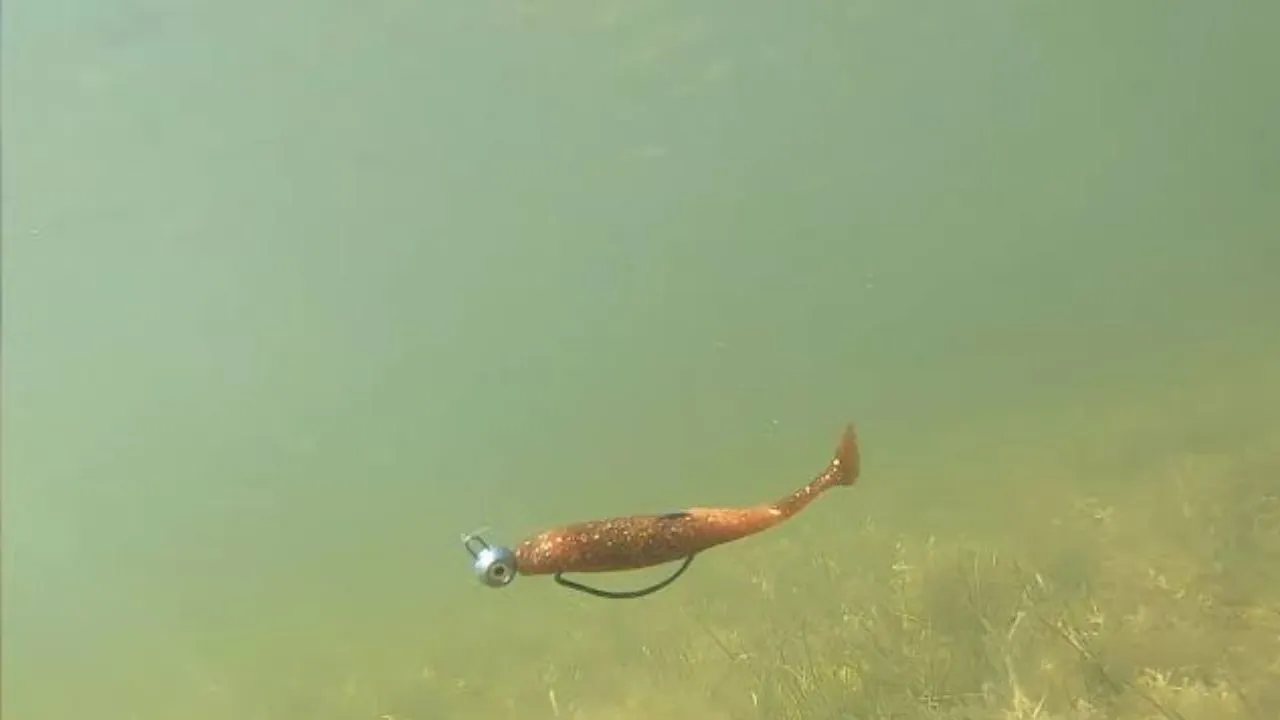
If you fish soft plastic swimbaits around grass, wood, or docks without rigging them weedless, you are losing time and losing fish. An exposed hook grabs every piece of cover it touches. The bait stops swimming. You spend more time clearing weeds than making casts. The fix is simple: bury the hook point into the plastic so the bait slides through cover, then let the plastic collapse when a fish bites so the hook can do its job.
This guide walks through the exact steps to rig a soft plastic swimbait weedless. It covers the hooks that work, the placement of every hook point, the small adjustments that keep the bait running straight, and the mistakes that cause anglers to miss fish even when the best way to rig a soft plastic swimbait weedless.
Why a Weedless Rig Changes Where You Can Fish?
A standard swimbait with an exposed hook works fine in open water. The moment you cast it toward a weed line, a laydown, or a dock, the hook catches. The bait hangs. You pull, it pops free, and the presentation is ruined.
A weedless rig hides the hook point inside the soft plastic. The bait slides over grass and through branches without grabbing them. When a bass bites, the soft plastic compresses. The hook point pushes out of the plastic and into the fish’s mouth. The same bait that snagged on every cast now moves through cover where big fish actually live.
This is not a niche technique. It is the standard way to fish soft swimbaits around shallow cover, spawning flats, and thick vegetation. Anglers who skip this step are fishing clean water only, and they are leaving the best spots alone.
Read Also: Catfish Fishing While Camping At Night
The Tackle You Need for a Weedless Swimbait
You do not need much. The rig comes down to three pieces: the swimbait, the hook, and a way to keep the bait from sliding down the hook shank.
The Hook. An extra-wide-gap (EWG) worm hook is the most common choice. The wide gap leaves room for the plastic to compress without blocking the hook point. For most four- to six-inch swimbaits, a 3/0 to 5/0 EWG hook fits well. A hook that is too small will not have enough gap to clear the plastic. A hook that is too large will make the bait bulky and cause it to roll.
Weighted swimbait hooks with a screw-lock keeper are another option. The spring screws into the nose of the bait and holds it in place, while the weight on the shank helps the bait track straight and sink at a controlled rate. These are especially useful when you need to fish deeper or cast into wind.
The Bait Keeper. Some hooks have a molded bait keeper on the shank. Others use a screw-lock or a spring. If your hook has no keeper, the bait will slide down the shank after a few casts and bunch up at the bend. A small drop of superglue at the nose can hold the bait in place, but a mechanical keeper is cleaner and easier to manage.
The Plastic. Any soft swimbait with enough body thickness will work. Baits with a belly slot or a molded hook channel make the process easier because the hook has a natural path to follow. If your bait lacks a slot, you can cut a shallow one with a razor blade to guide the hook point and reduce tearing.
Step-by-Step: How to Rig the Swimbait Weedless
This is the Texas-style method. It works on paddle-tail swimbaits, boot-tail swimbaits, and most soft plastic shad bodies. Follow the steps in order and check the bait after each one.
Step 1: Start at the nose. Push the hook point into the center of the swimbait’s nose. Aim for the middle of the plastic, not the top or the side. Run the hook point about a quarter inch to half an inch into the bait, then bring it out through the bottom. The hook eye should sit snug against the nose of the bait.
Step 2: Slide the bait up the shank. Push the swimbait up the hook shank until the nose meets the eye or the bait keeper. The bait should sit straight on the hook. If the nose is crooked, the bait will spin in the water. Take a second to center it.
Step 3: Measure the exit point. Lay the bait alongside the hook bend. Find where the hook point should come out of the plastic. On most swimbaits, this is along the back, just behind the top of the bait’s body. You want the hook to exit through the back, not the side, so the bait stays balanced.
Step 4: Create a slight bend. Before you push the hook through the back, bow the bait slightly. Push the middle of the swimbait toward the hook eye so the back of the bait curves outward. This gives the hook a straighter path through the plastic and keeps the bait from bunching up when it slides over the bend.
Step 5: Bring the hook point through the back. Push the hook point through the back of the bait at your measured exit point. Pull the hook through until the bend sits just behind the plastic. The hook shank should run straight through the body of the swimbait.
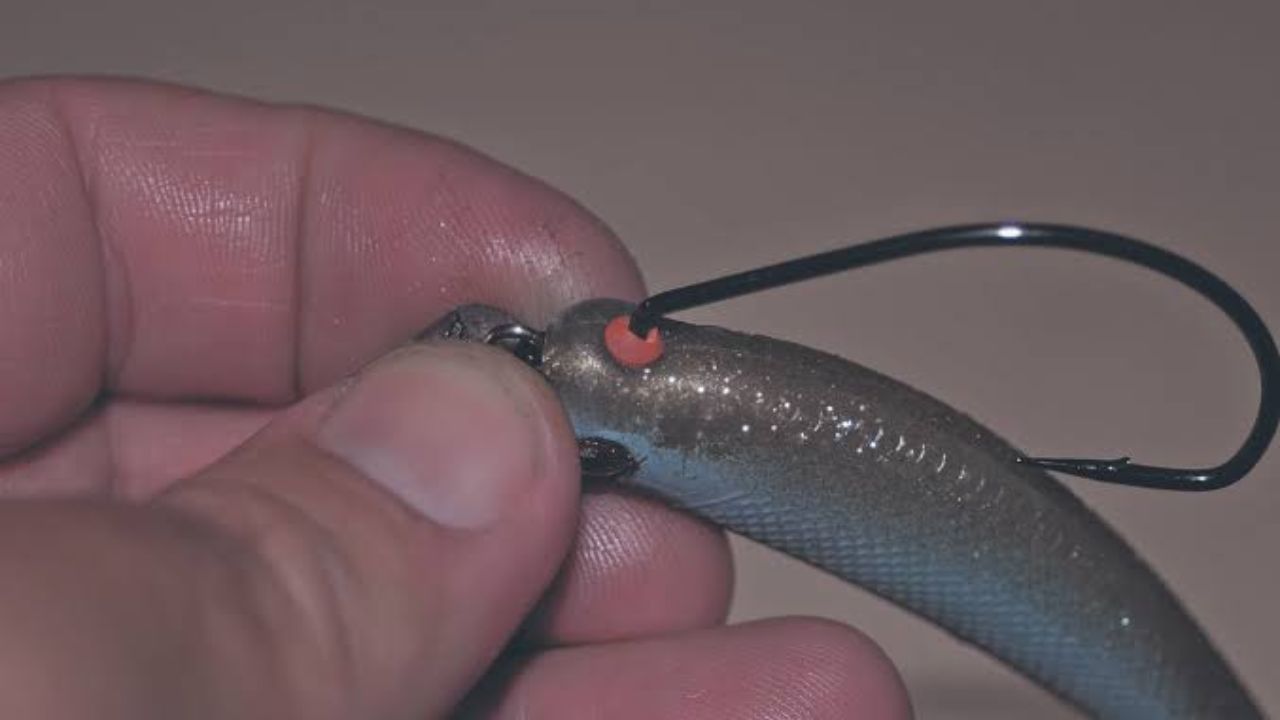
Step 6: Skin-hook the point. This is the step that makes the rig weedless. Take the hook point and bury it just under the surface of the plastic on the back of the bait. Do not push it deep. You want the point covered by a thin layer of plastic, no more than a sixteenth of an inch. If you can run your finger over the back of the bait and feel the point, it is too shallow. If the point is buried so deep that you cannot see the indentation, it is too deep.
Step 7: Check the alignment. Hold the bait up. The hook shank should run straight down the center. The bait should not twist to one side. The nose should sit flat against the hook eye. If anything looks crooked, pull the hook out and start again. A crooked swimbait does not swim true, and bass ignore baits that roll or spin.
The Small Adjustments That Make the Rig Work
Getting the hook through the plastic is only half the job. The details determine whether the bait runs straight, whether the hook point stays covered, and whether the hook can punch through the plastic when a fish bites.
Do not bury the hook too deep. The most common mistake is pushing the hook point too far into the plastic. A deep hook point will not come out when a fish bites. The plastic is too thick for the hook to push through, and the hookset fails. The point needs to sit just under the skin, covered but ready to break through with a firm hookset.
Do not leave it too shallow. The opposite mistake is leaving the hook point exposed. Even a tiny bit of exposed point will grab grass, wood, or line. Run your finger over the bait. If you feel the point, push it back into the plastic slightly.
Match the hook to the bait’s thickness. A thick-bodied swimbait needs a hook with a wider gap. A thin bait works better with a smaller gap. If the hook gap is too narrow, the plastic will block the point when it tries to exit. If the gap is too wide, the hook will wobble and the bait will not track straight.
Use a bait keeper or glue. A swimbait that slides down the hook shank after a few casts will bunch up at the bend and ruin the action. A screw-lock keeper or a spring keeper holds the nose in place. If your hook has no keeper, a drop of superglue at the nose will work, but it makes the bait harder to remove without tearing.
Check the bait after every few casts. Soft plastic tears. The hook point can work its way through the plastic after a few casts, especially if you are dragging the bait through heavy cover. Take two seconds to run your finger over the back of the bait. If the point is exposed, push it back in. If the plastic is torn around the hook exit, replace the bait. A torn bait does not hold the hook straight and will not swim true.
Common Mistakes That Cost Fish
Even anglers who know the steps make mistakes that cost them bites and cost them fish. These are the ones that show up most often.
Using the wrong hook size. A hook that is too small cannot span the body of the swimbait. The plastic blocks the point and the hookset fails. A hook that is too large makes the bait bulky and causes it to roll. Match the hook to the bait. A four-inch swimbait usually takes a 3/0 or 4/0. A five-inch bait takes a 4/0 or 5/0. A six-inch bait takes a 5/0 or 6/0.
Rigging the bait crooked. A bait that sits off-center on the hook will spin or roll in the water. Bass are tuned to the movement of baitfish. A swimbait that rolls is not acting like a baitfish, and it does not get eaten. Take the extra thirty seconds to line the bait up straight on the best way to rig a soft plastic swimbait weedless.
Setting the hook too early. When a bass eats a weedless swimbait, the fish compresses the plastic before the hook reaches the jaw. If you swing the moment you feel the bite, the hook may still be buried in the plastic. Pause for a split second, let the fish turn with the bait, then set the hook hard. The plastic needs that moment to collapse and release the point.
Fishing a torn bait. A bait with a torn hook exit hole will not hold the hook straight. The hook will wobble, the bait will roll, and the hook point will not stay covered. Replace torn baits. A pack of swimbaits costs less than a day of missed fish.
You May Also Like: Best Camping Fishing Gear for Beginners
When and Where to Throw a Weedless Swimbait?
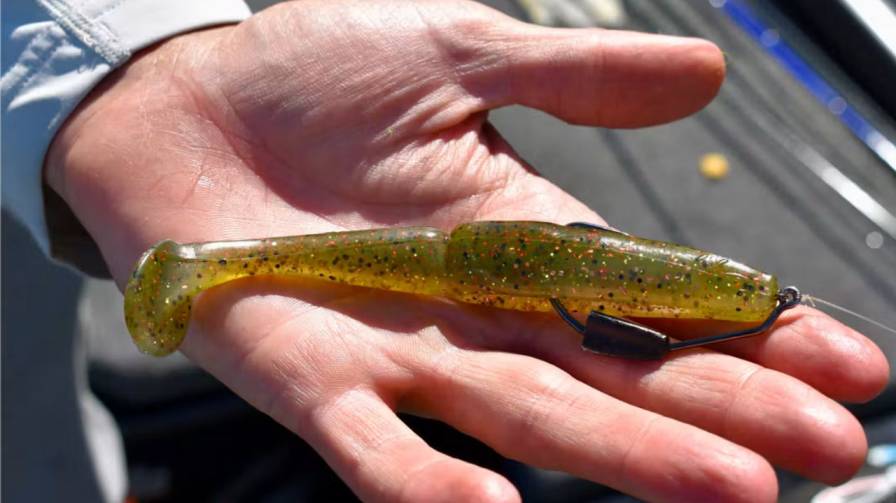
A weedless swimbait is at its best in places where an exposed hook would be a disaster. Grass beds, lily pads, hydrilla, milfoil, and coontail are all prime targets. Laydowns and brush piles are another. Docks with submerged structure underneath are a third.
The technique works because the bait can move through cover that other lures cannot touch. Cast it past the edge of a weed bed, let it sink to the top of the grass, and reel it slowly so the paddle tail thumps. The bait slides over the grass without grabbing. When a bass hits, you feel the weight and the thump stops. Pause, then set the hook.
In shallow water, a weightless or lightly weighted hook keeps the bait high in the water column. In deeper cover, a weighted swimbait hook gets the bait down to where the fish are holding. The same rigging method works for both. The only change is the hook you start with.
Conclusion
Hold the rigged bait in front of you. The hook point should be buried just under the surface of the plastic, covered by a thin layer. The bait should sit straight on the shank, with the nose flat against the eye or keeper. Run your finger over the back of the bait. You should feel plastic, not metal.
If everything checks out, cast it into the thickest cover you can find. That is what this rig is for. The bait will slide through places that would swallow any other lure. When the line jumps, pause for a beat, then drive the hook home. The plastic will collapse, the point will find its mark, and the fish will be yours.
The best way to rig a soft plastic swimbait weedless is not complicated. It takes about a minute once you have done it a few times. But that minute is the difference between fishing clean water and fishing where the big fish live.